From field walk to finished report.
- 01
Capture
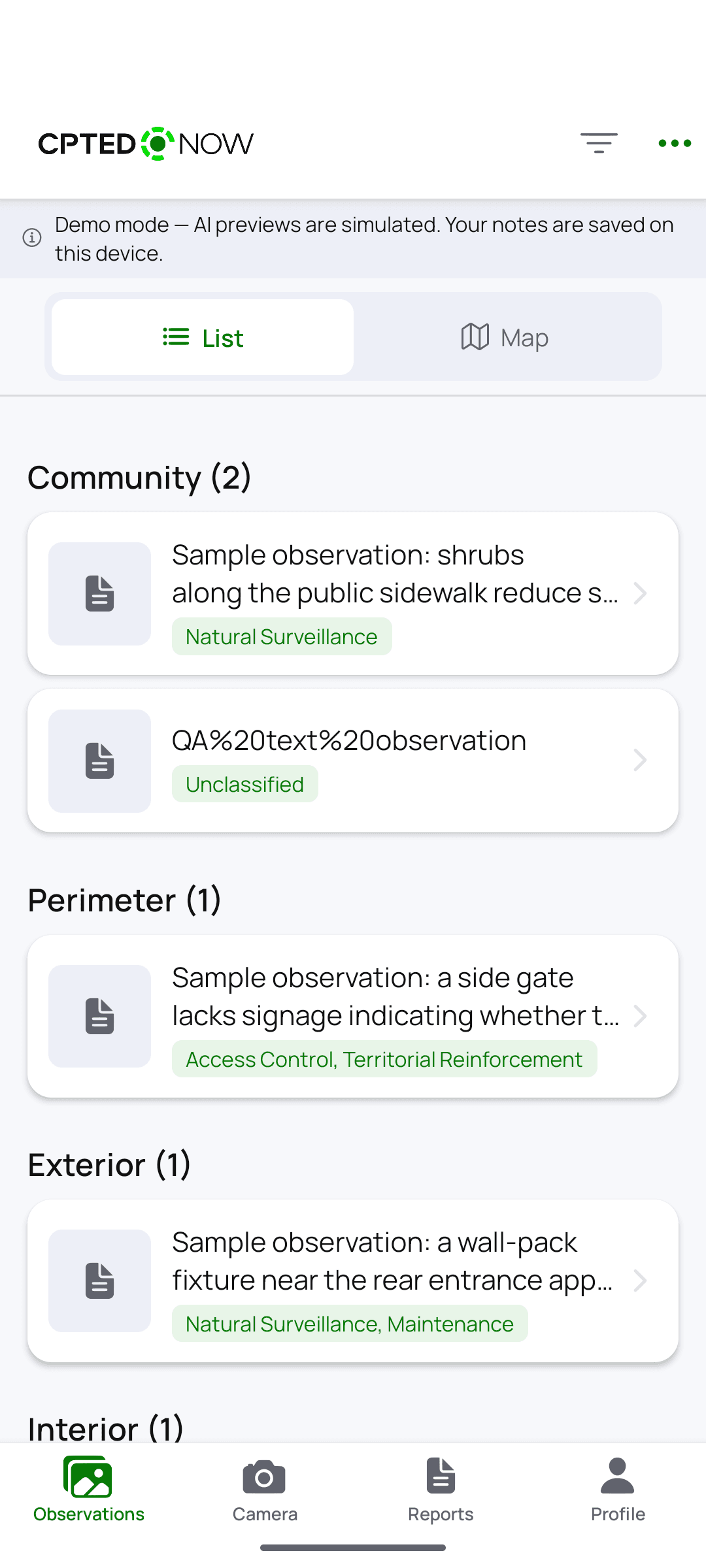
Walk the site with the mobile app. Keep photos, notes, location, and compass bearing with each observation. Capture offline and sync when a connection returns.
- 02
Analyze
Request AI-assisted drafts from your observations and site context. The pipeline organizes analysis through seven product lenses and summaries by location ring.
- 03
Review
Inspect the draft output, edit findings, and re-run analysis where needed. Check the evidence and decide which recommendations belong in your final report.
- 04
Deliver
Assemble a consistent report with your findings, priorities, and supporting evidence. Review the final document and export it with your organization’s branding.
Your review is part of the work
There are no approval gates between analysis steps or a required sign-off before exporting a completed report. You can inspect outputs, edit draft findings and narrative, and re-run analysis. Check the assembled document before you export or share it: the software does not verify that your conclusions are correct or replace professional review.
Exports include Word and PDF. Report customization supports assessor and client logos, heading accents, and disclaimer text. Keep a copy of your final deliverable and the supporting evidence under your own records policy.
Seven product lenses.
One informed reviewer: you.
The analysis reviews observations across these lenses, followed by a sensitivity and ethics review. Environmental sustainability is an additional product lens, not a claim that ISO 22341 defines seven CPTED principles. Each lens returns relevant draft findings; it may return none where the evidence is insufficient.
01
Natural surveillance
Sightlines, lighting, and opportunities to see and be seen.
02
Access control
Entrances, routes, and boundaries that guide and limit movement.
03
Territorial reinforcement
Clear transitions and signs of ownership, care, and responsibility.
04
Maintenance
Upkeep, repairs, and management practices that sustain the use of a place.
05
Activity support
Legitimate uses that bring people into a space and support informal observation.
06
Target hardening
Physical resistance: locks, doors, glazing, and barriers that make a target harder to defeat.
07
Environmental sustainability
An additional product lens: energy, materials, and environmental impacts of security measures, including lighting and landscape choices.
| Task | Separate tools | With CPTED NOW |
|---|---|---|
| Field evidence | Collect and reconcile photos, locations, and notes | Keep them with the observation |
| Drafting | Write and format each narrative | Review and edit an AI-assisted first draft |
| Report structure | Maintain templates across jobs | Assemble from a consistent structure |
| Professional judgment | Yours | Still yours |